| Category | Electroencephalogram |
WHAT IS EEG?
An electroencephalograph (EEG) is the recorded electrical activity generated by the brain in general EEG is obtained using electrodes placed on the scalp with a conductive gel. And it shows changes in brain activity that may be useful in diagnosing brain conditions, especially epilepsy and other seizure disorders.
Why is an EEG test done?
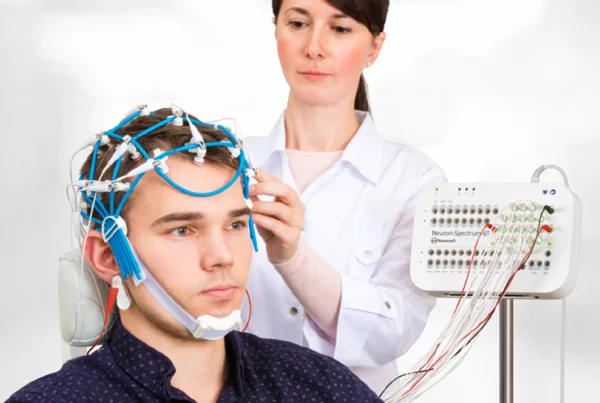
An EEG test detects abnormalities of your brain waves or in the electrical activity of your brain. During the procedure, electrodes consisting of small metal discs with thin wires are pasted you’re your scalp. The electrodes detect tiny electrical charges that result from the activity of your brain cells.
Where do you get an EEG done?
An EEG can be done in the Neurology doctor’s clinic or highly dedicated neuro lab or neurology-based hospital.
How do EEG records can conduct?
Ask the patient to lie down on a bed or sit on a chair (those who can’t lie down). The technologist will attach electrodes to different locations on the scalp using adhesive paste. Each electrode is connected to an amplifier and EEG recording machine.
What happens if EEG is abnormal?
Abnormal EEG results can show up in two ways. First, Normal brain activity may be suddenly interrupted and changed. This happens in epileptic seizures. In partial seizures, only part of the brain shows the sudden interruption.
Can anxiety cause abnormal EEG?
It’s reported since the 1980s a high abnormality rate has been reported for patients with panic disorder.
What can a sleep-deprived EEG diagnosis be?
A sleep-deprived EEG further assesses changes in brain activity that can indicate various brain disorders, like epilepsy or other seizure disorder. A sleep-deprived EEG can be used to diagnose and differentiate various types of epilepsies. Sometimes seizure activity can manifest with psychiatric symptoms.
Can EEG results be wrong?
Yes, EEG can be bad for you. The consequences of being misdiagnosed with epilepsy are obvious and serious. When the diagnosis is based largely on an abnormal EEG, no amount of subsequent normal EEGs will cancel the previous abnormal one, and the wrong diagnosis is very difficult to undo.
Why does EEG
Epilepsy
Generalized (grandmal) seizures?
Absence (Petitmal) Seizures.
Localized brain tumors.
Sleep disorders (Polysomnography)
Narcolepsy.
Sleep apnea syndrome.
Insomnia and parasomnia.
RLS (Restless leg syndrome).
PLMD (Periodic leg movement’s disease.
Helpful in knowing the cortical activity, toxicity, hypoxia, and encephalopathy.


