| Category | Nerve Conduction Study |
WHAT IS NCV- NERVE CONDUCTION VELOCITY
A nerve conduction velocity (NCV) test also called a nerve conduction study (NCS) measures how fast an el0ectrical impulse moves through your nerve. NCV can identify nerve damage. During the test, your nerve is stimulated, usually with electrode patches attached to your skin.
HOW IS A NCV TEST PERFORMED?
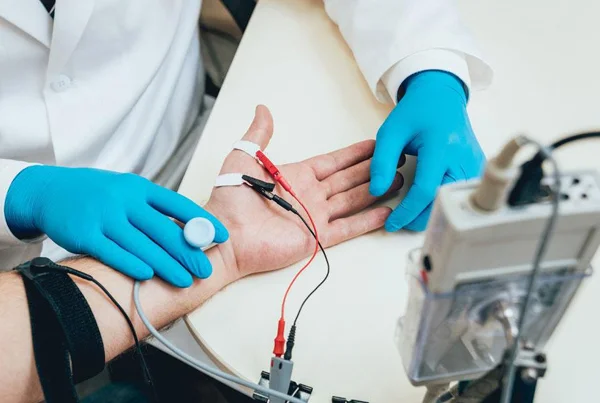
NCV can determine nerve damage and destruction. During the test, the nerve is stimulated, usually with surface electrode patches attached to the skin. Two electrodes are placed on the skin over the nerve. One electrode stimulates the nerve with a very mild electrical impulse and the other electrode records it.
WHY IS NCV TEST DONE?
A nerve conduction velocity (NCV) test also called a nerve conduction study (NCS) measures how fast an electrical impulse moves through your nerve. NCV can identify nerve damage. During the test, your nerve is stimulated, usually with electrode patches attached to your skin.
HOW LONG DOES A NCV TEST TAKE?
Usually, NCV testing takes less than 30 minutes. Depending on the number of nerves tested.
HOW DO I PREPARE FOR A NERVE CONDUCTION TEST?
The main way to prepare for a nerve conduction study is to temporarily avoid using lotion or oils on your skin in the days leading up to your appointment. This is because lotions and oils can interfere with the electrode's ability to stick properly to the skin.
• WHAT ARE THE SIGNS OF NERVE DAMAGE?
The signs of nerve damage
WHAT ARE NCV SUBJECTS?
NCV: Finance, Economics, and Accounting. NCV: Marketing. NCV: Management. NCV: Office Administration. NCV: Information Technology and Computer Science.
WHAT CAN NCV DIAGNOSE?
An NCV test can be used to diagnose a number of muscular and neuromuscular disorders, including:


