| Category | Nerve Conduction Study |
WHAT IS A EMG- ELECTROMYOGRAPHY
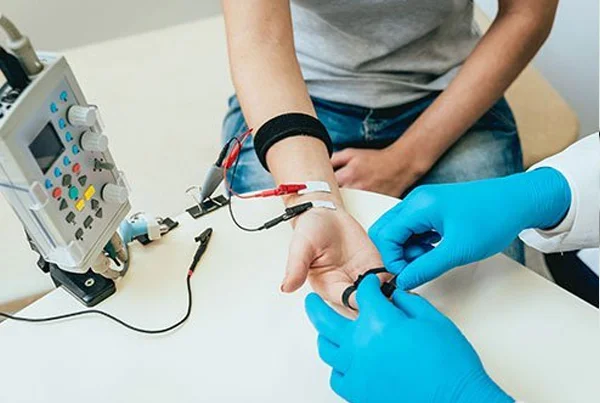
Electromyography (EMG) measures muscle response or electrical activity in response to a nerve's stimulation of the muscle. The test is used to help detect neuromuscular abnormalities. During the test, one or more small needles (also called electrodes) are inserted through the skin into the muscle.
WHAT DISEASES SHOW UP ON EMG?
An EMG can be used to diagnose a wide variety of neuromuscular diseases, motor problems, nerve injuries, or degenerative conditions, such as:
WHAT ARE THE TWO TYPES OF EMG?
Two kinds of EMG signals in widespread use include surface EMG and intramuscular (needle and fine-wire) EMG. To perform intramuscular EMG, a needle electrode or a needle containing two fine-wire electrodes is placed within the muscle of interest (invasive electrode).
Electromyography (EMG), the recording of electrical activity in muscle, should be regarded as an extension of the clinical examination. It can distinguish myopathic from neurogenic muscle wasting and weakness. It can detect abnormalities such as chronic denervation or fasciculation in clinically normal muscle.


