| Category | Polysomnography |
What is a sleep study?
A Sleep study, also known as Polysomnography, is a test that measures and records different body functions while you sleep. These include:
The test is used to diagnose sleep disorders. Sleep disorders are conditions that cause problems with sleeping. These include trouble falling asleep, getting too much sleep, and irregular breathing during sleep. Sleep disorders can affect your overall health, safety, and quality of life. Lack of sleep may increase your risk of serious conditions such as depression, diabetes, and heart disease. It may also lead to car crashes and other accidents. Early diagnosis and treatment of a sleep disorder may help you avoid health complications.
Other names: Polysomnography, sleep apnea study, home sleep study
What is it used for?
A Sleep study is used to diagnose sleep disorders. Common sleep disorders include:
Why do I need a sleep study?
You may need this test if you have symptoms of a sleep disorder, such as:
What happens during a sleep study?
A Sleep study may be done at a hospital or a sleep study clinic, or in your own home. A home sleep study, also known as a sleep apnea study, is used to help diagnose sleep apnea. It does not diagnose other types of sleep disorders.
During a study at a hospital or sleep clinic:
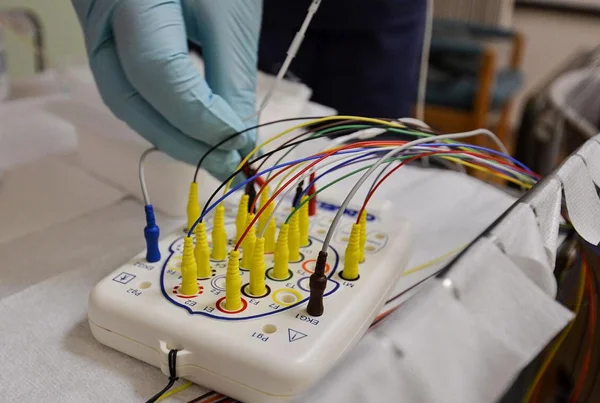
The electrodes will be connected to a computer with wires. The wires will be long enough to allow you to move during sleep.
The electrodes will record different body functions, such as breathing, heart rate, and brain waves. They'll also record your leg and eye movements.
A small clip will also be placed on your finger or ear to monitor the level of oxygen in your blood. This is known as pulse
During a home sleep study:
You will pick up sleep study equipment at your provider's office, or it may be delivered to you Your provider will give you thorough instructions on how to use the equipment. Be sure to ask questions if you're unsure about anything. On the night of your study, you will attach the electrodes to your body and connect them to a sleep monitoring device. The electrodes will record different body functions including breathing rate, heart rate, blood oxygen levels, and snoring. In the morning, you'll remove the electrodes and return the sleep monitoring device as directed by your provider.
Will I need to do anything to prepare for the test?
The preparations are the same whether you are being tested at a hospital or clinic, or in your home.
To prepare for your sleep study:
Avoid alcohol and caffeine during the afternoon and evening before your test. Don't nap during the day. Don't use lotions, hair gels, or makeup before the est. They can affect the way the electrodes work. If you normally take sleep medicines, talk to your provider about whether or not you should take the medicine before the test.
Are there any risks to the test?
You may have some mild skin irritation from the electrodes. There are no other known risks to having a sleep study.
What do the results mean?
Your results may include measurements of the following:
Apnea-Hypopnea Index (AHI). This looks at how many episodes of sleep apnea happen in a night. If you have more than five episodes, it probably means you have sleep apnea.
Sleep efficiency. This is a calculation based on the total number of minutes you sleep during the night compared with the amount of time you spend in bed. So if you spend a long time in bed without being able to sleep, you would have low sleep efficiency.
Oxygen Desaturation Index (ODI). This measures the number of times your oxygen level drops during sleep. Lower than 90 percent oxygen is considered abnormal.
Heart rate. A normal heart rate is between 60 and 100 beats per minute. This result will show if your heart is beating faster or slower than normal.
Your provider will review all the results and provide a treatment plan if appropriate. If you have questions about your results, talk to your health care provider.
Is there anything else I need to know about a sleep study?
If you've been diagnosed with sleep apnea, your provider may recommend lifestyle changes, such as losing weight, avoiding alcohol, and quitting smoking A continuous positive airway pressure (CPAP) machine. A CPAP gently blows air into your airways to keep them open while you sleep.
Dental devices, such as a: Mouthguard, helps prevent you from grinding your teeth during sleep (sleep bruxism). Studies have shown there may a connection between sleep bruxism and sleep apnea.
Mandibular advancement device, a small plastic device that pulls the lower jaw and tongue forward. This helps keep the airways open during sleep.
Tongue-retaining devise, which uses suction to keep the tongue forward. If the tongue moves back, it can block your airway.
If other treatments have failed, your provider may recommend a surgical procedure to correct problems in your throat, nose, or jaw.
Treatments for other sleep disorders will depend on the specific condition and your unique health needs


